ANOTHER DAY, ANOTHER FOLLETT

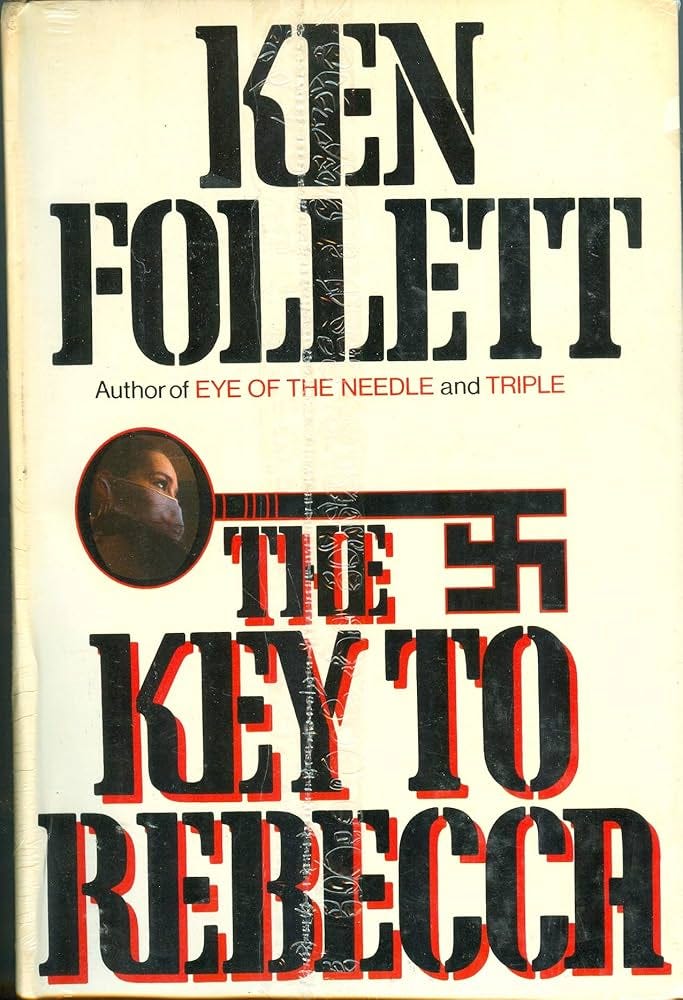
Prior to the publication of Eye of the Needle, in 1978, Ken Follett published around ten novels (the exact number depends upon whether you include his novelization of the film Capricorn One, published under the pseudonym Bernard Ross, his YA novels, and books like The Big Needle, which are so slender as to barely qualify as novel-length), most of them fairly forgettable. Most pop-fiction junkies date his arrival on the scene to the publication of Eye of the Needle, which was a monster success and the first novel to earn him household-name status (as well as an Edgar Award from the Mystery Writers of America, and a spot on the Publishers’ Weekly list of America’s ten bestselling books of the year). I’ve written before about popular fiction writers who seem to have begun their careers with a major hot streak. We have Joseph Wambaugh, whose career began with these four titles – The New Centurions, The Blue Knight, The Onion Field, and The Choirboys – all of them brilliant. Likewise, we have Frederick Forsyth who began his career as a novelist with The Day of the Jackal, The Odessa File, The Dogs of War, and The Devil’s Alternative. If Eye of the Needle truly had been Follett’s debut, his career would have begun with a major hot streak: Eye of the Needle (1978), Triple (1979), The Key to Rebecca (1980), The Man From St. Petersburg (1982), and Lie Down With Lions (1985). Lately, I’ve been re-reading my way through these five books, and, just today, I finished my re-read of The Key to Rebecca.
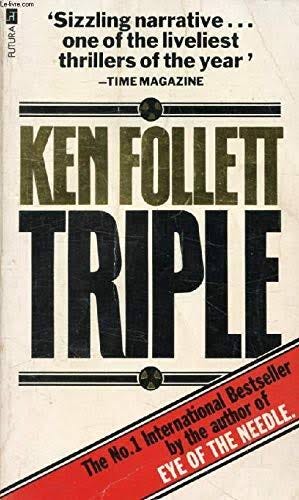
The Key to Rebecca arrived on the scene while Eye of the Needle mania was still sweeping the world of American pop fiction. That novel, which was a huge seller in hardback, was still a huge paperback bestseller in 1980 and could be seen on airport spinner racks, grocery store impulse racks, and in huge piles at bookstore chains such as Brentano’s and B. Dalton’s. In doctor’s offices, on airplanes, and in the stands at kids’ volleyball and soccer games, you would see pop-fiction junkies tightly gripping that ubiquitous white cover with the bloody stiletto and a swastika on it. A film version was in the works and was heavily anticipated by fans of adventure cinema. Follett’s immediate follow up was Triple, a novel of international intrigue that is set in the late 1960s. It sold very well (the eleventh bestselling novel in America for 1979) but wasn’t quite the instant classic that Needle had been. Thus, Follett may have been hoping to recapture the magic of Needle, by recycling many of its aspects – a World War II setting, the hunt for an almost supernaturally elusive German spy who has info that could doom the Allied war effort, a brave and beautiful female who will be enlisted to help snare him, a heartbroken British widower in charge of the spyhunt, etc. This isn’t to say that The Key to Rebecca is just Eye of the Needle with a few slight changes. Unlike Needle, which takes place all across Great Britain, The Key to Rebecca confines its action almost exclusively to Egypt. The opening line is, “The last camel collapsed at noon.” Needless to say, there are no camels in Eye of the Needle (although, metaphorically, camels and eyes of needles have long been connected). Follett’s opening line has become regarded as sort of a pop-fiction classic. Elizabeth Peters’ 1991 crime novel, The Last Camel Died at Noon, is almost certainly a nod to Follett. A 2016 article in the online publication SleuthSayers, about great opening lines in thriller novels, is entitled “The Last Camel Collapsed at Noon,” and lists Follett’s line as its first example of a great grabber of an opening line, ahead of examples by the likes of Raymond Chandler and James Lee Burke. This is somewhat ironic because The Key to Rebecca is heavily indebted to Daphne Du Maurier’s 1938 gothic novel, Rebecca, which begins with probably the most memorable opening line in all of 20th century pop fiction: “Last night, I dreamt I went to Manderley again.” The opening line of TKTR is more memorable than the opening line to Eye of the Needle (“It was the coldest winter for forty-five years.”), but they both reference extreme weather, and Follett may have been intentionally trying to echo Needle. Still despite the many similarities, TKTR is no retread. It is an entirely original spy novel and, had it been published in 1978, may well have been every bit the breakout novel that Needle proved to be for Follett.
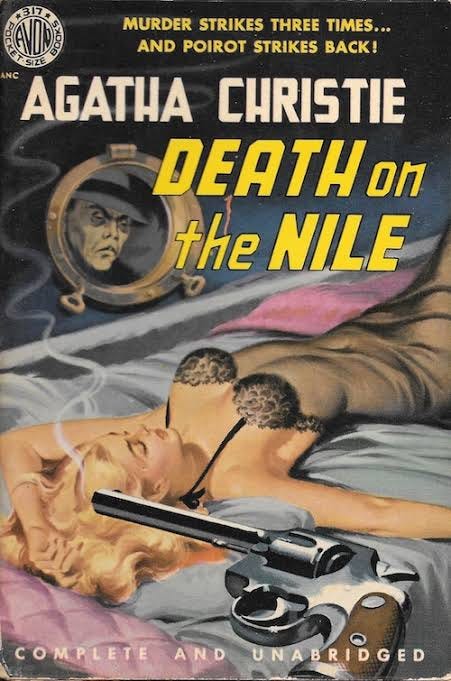
Whether you find yourself preferring TKTR to Needle will really depend on your own literary tastes. Being from rainy Portland, Oregon, I tend to prefer tales set in gloomy British landscapes to brightly blazing African ones. I also prefer thrillers that open with a bang rather than with a long, slow burn. The first knife murder in Needle occurs on page 9. In TKTR Follett made me wait all the way until page 17 before giving me a knife murder to enjoy. That’s almost inexcusable. Still, I can imagine plenty of readers finding TKTR the better of the two books. One of its best features, as far as I am concerned, is that it is a pop fiction that is steeped in pop fiction. It is one of those pop fictions, like Jasper Fforde’s 2001 novel The Eyre Affair, that references a classic popular novel in its title (curiously, Jane Eyre and Rebecca are the two most influential books in the development of the 20th century gothic romance novel). And Du Maurier’s novel isn’t the only pop fiction mentioned in the novel. Several of the characters are pop fiction fans and the book is full of references to works by Raymond Chandler, Georges Simenon, Agatha Christie, and others (the Christie book referenced is, of course, Death on the Nile, published the year before Rebecca; but the most interesting use of Christie in the book is when the femme fatale invents a nonexistent Christie title – The Clue of the Bloodstained Atlas – in order to communicate a secret message to a fellow captive of the Nazi villain, although that phony title sounds more like a Nancy Drew book than a Christie story).
Another reason why I believe I found TKTR slightly less compelling than Needle is because the heroes of the latter were trying to save Great Britain from a Nazi occupation, while the heroes of the former were trying to preserve an unpopular British occupation of Egypt. The British characters in TKTR are not really saviors of Egypt. The British invaded and imperialized Egypt in 1882. They were extremely unwelcome at the time and even more so by 1942, even though they had granted Egypt partial independence in 1922 (not until after the Suez Crisis of 1956 did Egypt finally rid itself of all British control; since then, of course, Egypt has been paradise on Earth). Most Egyptians, if Follett is to be believed, were eager to see the Brits routed from Egypt by the Nazis. They seemed to believe that occupation by the Nazis would be preferable to occupation by the Brits. Thus, though I wanted the British heroes to thwart Alex Wolff, the Nazi superspy at the heart of the story, I couldn’t help being annoyed by the blindness of the British characters to how horrible their own Egyptian occupation was. Follett, fortunately, is not blind to this aspect of history and demonstrates how disliked the Brits were by the natives. And virtually every Egyptian character secretly hopes to see Erwin “the Desert Fox” Rommel’s invasion of Egypt route the British from northern Africa.
Rommel is just one of several historical characters who play a speaking role in Follett’s novel (he is also an important factor in Eye of the Needle). Another is Anwar al-Sadat, a future president of Egypt who, in 1942, was a junior officer in the Egyptian signal corps and, along with a few others, including Gamal Abdel Nasser, secretly formed an organization, Free Officers, dedicated to overthrowing British rule. (In 1942, both the Jews of Palestine and the Muslims of Egypt, hated the British; the Jews in the novel Exodus, Leon Uris’s 1958 bestseller about the formation of modern Israel, seem to loathe the Brits more than they do the Nazis.) Because of his hatred of British rule, Sadat was a Nazi sympathizer and worked to help undermine the British efforts to defeat them. But Follett doesn’t treat him like a villain. Sadat, in his few scenes, comes across as brave, level-headed, honorable and smart. Later on in his life, long after the years depicted in TKTR, Sadat, along with Israeli Prime Minister Menachem Begin (also a former terrorist, responsible for the King David Hotel bombing which killed 28 Brits, as well as another 63 innocent people) would help forge a peace between Israel and Egypt and become much honored around the globe. But he was killed by Islamic terrorists from his own country in 1981, at the age of 61. The United States posthumously awarded him a Presidential Medal of Freedom and a Congressional Gold Medal. Many other countries around the globe, including Italy and France, gave him similar honors. The British, however, did not.
As you can see, the mission of protagonist Major William Vandam in TKTR is a slightly less worthy one than the mission of Percy Goldiman, the primary hero of Eye of the Needle. Both men are trying to defeat Nazis, but Vandam is trying to protect a partial British occupation that is itself a moral abomination. If that kind of thing doesn’t bother you, however, you may find TKTR every bit as rousing as Eye of the Needle. To be honest, I wasn’t overly bothered by it myself, but it made the Brits at the heart of the tale slightly less admirable than the Brits at the heart of Needle.
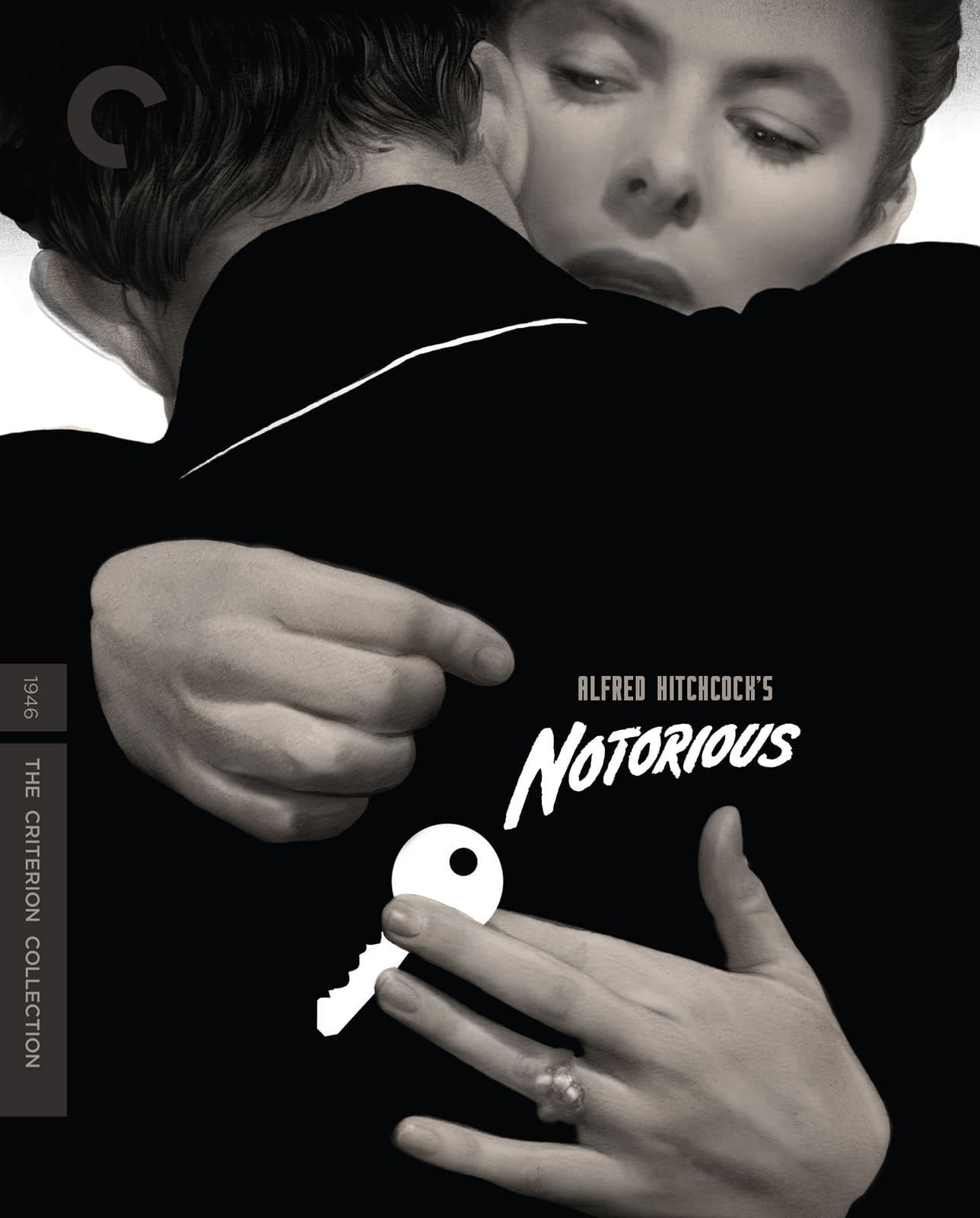
But one of the major heroes in TKTR is actually a heroine, a beautiful (naturally) young Egyptian Jew named Elene. She reminded me a lot of the Ingrid Bergman character in Alfred Hitchcock’s 1946 film Notorious (made six years after his adaptation of Rebecca). In that film, Bergman plays Alicia Huberman, the beautiful (naturally) daughter of a German-America whose father has been imprisoned for being a Nazi collaborator during the war. Cary Grant plays T.R. Devlin, a government agent who recruits Alicia to seduce one of her father’s old Nazi comrades who now lives in South America and try to infiltrate his gang of fellow Nazis. In the movie, Alicia falls in love with Devlin and feels betrayed when she believes that he is essentially using her the way a pimp would use a whore. The same thing happens in TKTR between Elene and Vandam. Vandam wants Elene to become intimate with Alex Wolff so as to figure out how to thwart his efforts to aid Rommel’s planned invasion of Cairo. Elene has fallen in love with Vandam and now she feels ill used by him, not realizing that he loves her, too, but he won’t let that stand in the way of bringing down Germany’s top spy in Egypt.
I am not the first person to note that Follett has been creating strong female characters for practically his entire career. In TKTR Elene proves to be at least as brave and crafty as Vandam. Lucy Rose in Eye of the Needle may be the most bad-ass character in the novel. Jackdaws is a feast of strong female characters. The Man From St. Petersburg is at least partially a feminist take on the early 20th century suffragist movement in Britain, and Emmeline Pankhurst even appears in a speaking role. Night Over Water, A Place Called Freedom, The Hammer of Eden – plenty of other Follett novels feature women as their most admirable characters.
Follett is also a master of creating villains who are not without sympathetic characteristics. As bad as Wolff is, he has some admirable qualities. As a native of Egypt, he comes by his hatred of the British naturally. He is smart, resourceful, and able to survive under the most inhospitable of conditions (including in an Egyptian desert after the death of his last camel leaves him stranded in an ocean of sand). He is a cultured individual who loves good caviar and champagne and music. Though he is a spy who got his espionage training in Germany, he isn’t really a Nazi. He is an ardent Egyptian nationalist. The Nazis are basically just his best bet of ousting the Brits from his homeland. He is far from a good guy and, towards the end of the novel, Follett goes overboard in trying to portray him as a mad man. But for most of the book he is a cool and intelligent operative, if also a mass murderer and sexual deviant (the book includes an intriguing threesome).
The Key to Rebecca is about as much fun as a popular spy novel can get. The book includes a thrilling chase scene in which a motorcyclist goes up and down (outdoor) staircases in an effort to run down a villain who has escaped a police trap on foot. Like most Follett novels, it is beautifully paced, becoming more exciting with each new chapter until the reader almost unwittingly finds himself completely absorbed by it. If you love pop fiction, you can’t afford to miss this one. It is a pop fiction that, among other things, celebrates the centrality of pop fiction to life in the English-speaking world.